

The Longing
What Bezos, a Victorian invalid, and a video store in East Texas can teach you about the only thing AI can't replace
“Life is a use it or lose it proposition.”
- Bill Gurley
Jeff Bezos once told Bill Gurley the only thing he looks for when making an angel investment. Not the product. Not the market size. Not the deck.
“Is this person going to do this no matter what?”
All of his questions circled that single variable. What if this happens? How would you handle that? Why are you doing it? Every question was a probe aimed at the same spot.
Gurley spent twenty-five years as a venture capitalist and came to believe this was the highest-signal predictor of returns. Not intelligence. Not credentials. Not even the idea. Whether the founder had what he calls obsession — friction inverted. Not discipline pushing you through resistance, but resistance pulling you toward it.
Venture capitalists have a limited number of board seats. They can’t fund everything above a hurdle rate. They have to fall in love. The entire model is built on a bet that most financial frameworks can’t express: that the quality of a person’s relationship to their work predicts more than any spreadsheet.
There is a name for this variable. It just doesn’t come from finance.

Rebecca Goldstein is a philosopher, novelist, and MacArthur Fellow who has spent four decades asking strangers on planes and trains and buses a single question: what makes you feel like your life matters?
She calls it the mattering instinct. It is not the same as the survival instinct. Every living creature is wired to persist: the bacterium, the antelope, you. That’s biology. The mattering instinct is something stranger. It emerges from our capacity for self-reflection, the ability to step outside ourselves and notice how much attention we pay to our own lives, and then to ask whether we deserve it.
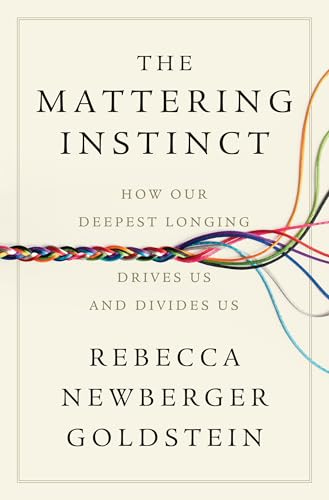
We aren’t just asking whether we matter to ourselves. We’re asking whether we should. Whether the enormous investment of attention that being a conscious human requires is justified by something real.
Goldstein calls this a longing, not a need or a want. A longing is long. It can never be entirely satisfied. It carries doubt. And the people who cause the most trouble in the world, she argues, are often those who cannot tolerate that doubt — who need absolute certainty that their way of mattering is the only way.
The variable Bezos is scanning for in founders is the mattering instinct expressing itself through work. The founder who will do this no matter what is a person whose mattering project and their company have become the same thing. Slack was a game company whose game failed. Discord was also a game company whose game also failed. In both cases the product changed completely. The founder’s relationship to the work didn’t. That’s what the capital was actually buying.
But what happens when a mattering project is present versus when it isn’t? Goldstein found the clearest answer not in a boardroom but in a family that produced three geniuses and one ghost.

William James, philosopher, psychologist, one of the most original thinkers of the nineteenth century, suffered a debilitating depression in his early twenties. He lay in bed for months, unable to answer letters, contemplating suicide. He had a medical degree he didn’t want to use. Enormous talent and no direction for it.
Then he made a decision. “My first act of free will be to believe in free will.” He chose a direction and committed everything to it. He poured himself into psychology and philosophy. He became, by the end of his life, one of the most important minds of his era.
His sister Alice had the same temperament. The same heightened consciousness. The same gift for precise observation that made William a revolutionary psychologist and their brother Henry a great novelist. But Alice was a Victorian woman, and there was no outlet. She spent her adult life as an invalid, incapacitated, her symptoms treated as hysteria. When she was finally diagnosed with breast cancer in her early forties, she greeted the news with joy. A real disease at last. It was only after her death, when her private journals were discovered, that anyone could see the talent locked inside her.
Same raw material as her brother. Opposite outcomes. The variable was not intelligence, not temperament, not willpower. It was whether a mattering project existed that could receive what she had to give.
Goldstein argues that much of what we diagnose as depression is an interrupted process of self-actualisation. People aren’t failing to be happy.
They’re failing to find a mattering project that fits.
Alice James lived in the nineteenth century. Her prison was a society that offered women no path to meaningful work. You might think we’ve solved that problem. We haven’t. We’ve just built a different kind of prison.

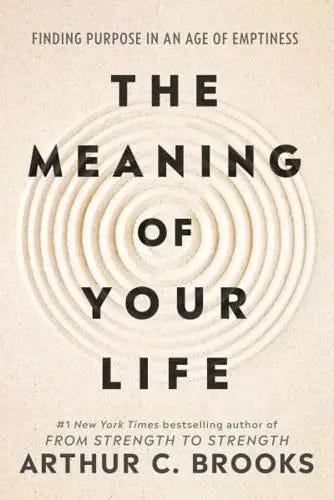
Arthur Brooks recently examined a paradox that should unsettle anyone who believes the system is working.
Depression symptoms among American adolescents nearly tripled between 2005 and 2019. Anxiety almost doubled. But the crisis isn’t hitting kids with obvious hardships. It’s hitting the winners. The elite students, the high performers, the people with everything visibly going right.
Brooks’s diagnosis: modern life has trapped an entire generation in what he calls Left Brain Land. The left hemisphere handles analytical, procedural, problem-solving work, the domain where strivers excel. The right hemisphere processes meaning, mystery, connection. An entire generation is endlessly optimising complicated problems while the realm of meaning feels unreachable.
Bill Gurley describes the same phenomenon from the economic side. He calls it the conveyor belt. Education has become a pipeline that produces grinders, not explorers. Kids are now forced to declare majors earlier than ever, the decision has moved from the end of sophomore year in college to junior year in high school.
Angela Duckworth, a decade after writing Grit, said she wished she had positioned it as fifty-fifty passion and perseverance. She thinks we taught a generation of high-performing children how to grind. If they don’t have love for the work, it turns into burnout.
The system didn’t just fail to teach them what was worth grinding for. It actively trained them away from the capacity to discover it.
Alice James had no map to a mattering project because Victorian society wouldn’t draw one for a woman. The kids on the conveyor belt have a map, it was drawn for them by admissions offices and career services and salary benchmarks, but it leads to someone else’s destination. The prison is different. The result is the same.
So why don’t they just change course? Because changing course is harder than anyone who hasn’t done it understands.

John Bucher, the mythologist and executive director of the Joseph Campbell Foundation. Bucher grew up in a family without much money in East Texas. Every Friday night, his father packed the family into the car and drove to a tin building on rural Route 21, a video store with a deal: ten movies for ten dollars. They made their way through the entire store. Then they started again. But the family didn’t just watch the films. They talked about what they meant, what they would do in those situations, how the stories related to their own lives. Bucher didn’t know it at the time, but it was group therapy dressed as Friday night entertainment. It was also the last generation of shared storytelling infrastructure, a room where a family built a common language out of stories they experienced together.
Bucher tells another story, this one about an estate sale, he finds a stack of old road maps, well worn, clearly lived with. The last one is a map of Los Angeles from the late 1960s. Bucher lives in LA. He starts looking for the roads he travels every day. Half of them aren’t on the map. And many of the roads that are on the map no longer exist.
How often in my life, he asks, am I trying to navigate using a really old map?
We inherit mattering projects the same way we inherit maps. From our parents, their parents before them, and the culture that shaped all of them. Many were drawn for a world that no longer exists. The career path that promised security. The definition of success that equated meaning with salary. The identity that said: if you are smart and work hard, you will matter.
Bucher’s sharpest insight is that updating the map requires grieving the old one first. There is a mourning process before a new story can take hold. He describes trying on new identities in high school, becoming the fedora guy for two weeks, discovering it didn’t work, retiring the experiment. This is what identity work looks like from the inside: awkward, provisional, frequently embarrassing. The culture reads exploration as failure and grief as weakness.
The alternative is worse. The alternative is navigating a changed world with a 1960s map and wondering why you keep ending up in places that don’t exist anymore.
But grieving the old map is only half the problem. The other half is that the system makes it very expensive to search for a new one.

Gurley has a framework for this: hidden versus observable metrics.
We consistently trade things we can’t show off: sleep quality, peace, passion, the freedom to change direction, for things we can: salary, title, status. He describes Wall Street colleagues with ridiculously high salaries who spent right up to the limit. The Hamptons lease. The membership club. The burn rate demanded the income and the income demanded the job and the job demanded the person they’d become. The financial trap and the mattering trap are the same trap.
Flexibility, Gurley notes, is one of the most valuable assets a person can have and the hardest to display. You can’t take a photo of optionality. You can’t post your freedom to change your mind.
His advice to young people is not about frugality. It’s about preserving the freedom to search. Don’t spend against your income — because the freedom to move is the freedom to find the mattering project that fits. And you will not find it on the first attempt. Nobody does.
Happiness, Goldstein points out, is an episodic emotion, a momentary report that things are going well right now. Flourishing is the long view. Parents are measurably less happy day-to-day than non-parents, yet rate their lives as more meaningful. You can tolerate tremendous unhappiness and still feel you’re living the right life. You can have everything the system says should make you happy and feel that none of it matters.
The performance review measures happiness. The salary benchmark measures happiness. The engagement metric measures happiness. The mattering instinct operates on the flourishing axis.
The entire system is measuring the wrong thing. And we’re about to find out what that costs.

AI does not create the mattering crisis. It reveals one that was already there.
If you’re grinding at work you don’t love, AI looks like a threat. It’s grind versus grind, and the machine will win. But if you’re a passionate learner building your craft, AI is a jetpack. Same technology. Opposite emotional response. The variable is whether you chose the work.
AI colonises Left Brain Land first. Coding, legal research, financial analysis, translation — the analytical, procedural, text-synthesis work that the conveyor belt trained an entire generation to perform is precisely what large language models do best. If your entire identity was built in that territory, AI doesn’t just threaten your job. It threatens the architecture of self that made the job feel like mattering.
If AI can grind for you, the grind is no longer the scarce resource. What’s scarce is knowing what to grind for.
John Bucher makes an observation I have been thinking about. Before the industrial revolution, your basic needs were met by people who loved you. Your house was built by your father and uncles. Your food was grown by your mother. Every fundamental requirement of life came through relationships. After the industrial revolution, all of those needs could be met by people who don’t know you exist. AI is the latest and most powerful technology for having your needs met by something that does not love you. It can answer your questions, write your code, manage your schedule, draft your letters. It can do everything except care whether you’re alive.
The best test Gurley has found for whether you’ve found your mattering project: does the learning feel free? Would you do it instead of watching a TV show? If continuous learning in your field feels indistinguishable from leisure, AI becomes your instrument rather than your replacement.
The mattering question, what makes you feel like your life is justified? Is the only question that still requires a human answer.
There’s a moment in Goldstein’s research that I haven’t been able to let go off.
A mother with three sons. The middle child, about five or six, says: “You don’t love me as much as you love my brothers.” The mother asks why. He says: “When you’re at the kitchen sink doing the dishes, if my older brother asks you a question, you turn off the water. If my younger brother asks a question, you turn off the water. But when I ask you a question, you don’t turn off the water.”
The mother later admitted: he was right. She found his questions boring.
Sadly I have felt that about my mother too.
Children are mattering detectors of extraordinary precision. They track where attention goes the way a trader tracks capital flows. The data is continuous, granular, and unforgiving. And the conclusions they draw, about whether they deserve attention, about whether they matter, become the map they carry for the rest of their lives.
The conveyor belt that Gurley describes, the Left Brain Land that Brooks diagnoses, the old maps that Bucher identifies, the interrupted self-actualisation that Goldstein names — they are all descriptions of the same failure.
A system that was supposed to help people answer the mattering question instead taught them to avoid asking it.
Goldstein insists on calling it a longing because a longing, by definition, is never fully resolved. You don’t solve the mattering problem. You carry it. The people who build the best lives are not the ones who eliminated the doubt but the ones who learned to act within it.
William James, prone in bed, unable to answer a letter for months, deciding that his first act of free will would be to believe in free will, that is not a resolution. It is a direction.
Bezos’s regret minimisation framework: imagine you are eighty years old and ask your future self what to do. Not what will succeed. What you would regret not having tried.
Bucher’s advice: give yourself grace as you try on new stories. Some will fit. Most won’t. The fedora guy lasted two weeks. That’s fine. The mourning is part of the process.
Brooks’s prescription: put the complicated parts in their proper place. Develop the capacity to engage with spaces that can’t be solved, only lived. Love. Faith. Calling. Creative abandon.
Four vocabularies. Same conclusion. AI can grind. AI can optimise. AI can synthesise and model and predict. What it cannot do is want something. What it cannot do is sit with the longing and decide, against all uncertainty, that this life, this work, this direction, is worth the investment of a finite and irreplaceable existence.
The worst thing the conveyor belt did was not assigning people the wrong career. It was convincing them the longing would go away once they got the job.

If this resonated, share it with someone who needs to hear it.
One of your best Ahmed
Thanks for sharing